

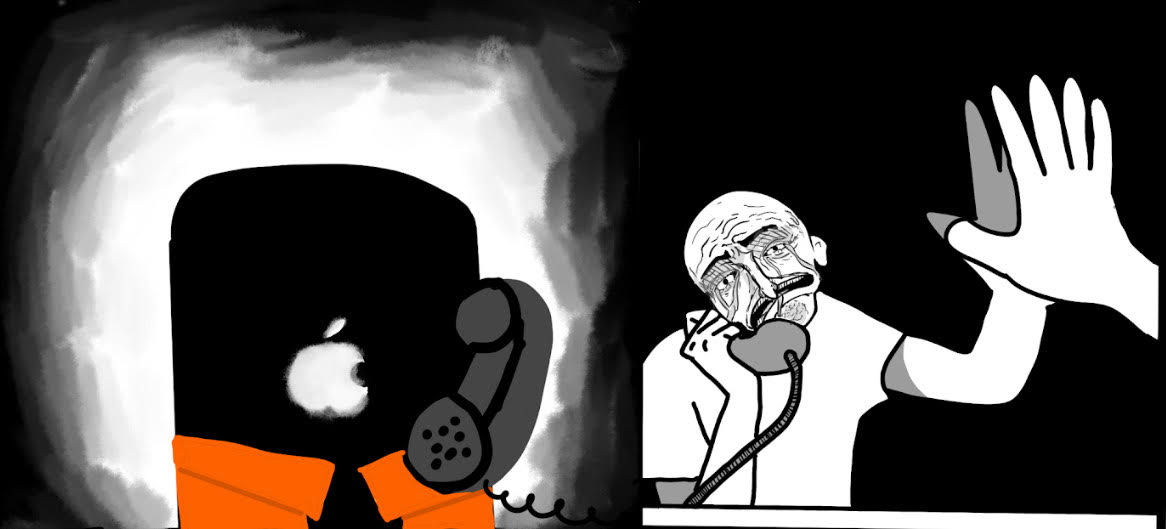

Many different rumors are circulating about why there has been a stricter phone policy this year than in the past. Genevieve Fernandez, Dean of Students, was able to set the record straight as to why teachers and staff have been more strict about no phones.
“It’s not just us, it’s district-wide and state-wide, we have to put a plan in place because the superintendent said we had to,” Fernandez said. The phone policies now in place have also been put into action at all of the other schools within our district, making it so that everyone must keep their phones off and away.
What exactly is Shorewood’s phone policy, though? According to Fernandez, the rules state that phones, and any other personal electronics, must be “off and away, for the day”, she said. Although there are exceptions, such as “Phones and personal electronics that are used for health needs and language learning support will be by administration, or an IEP or 504 on a case-by-case basis,” Fernandez said.
Additionally, if the teacher permits it, personal electronics can be used during class to help further students’ education. This rule is up to the teacher’s discretion. So, if permitted, students can be allowed to use personal devices to listen to music during silent work time, take pictures of the board, or use their personal devices for other purposes if it is used to help further their education.
While this new policy may be easier said than done for some students, Fernandez said that she still often confiscates phones from students who are wandering the hallways during class. While some students willingly give up their phones, there have been some instances of pushback against confiscation.
“If a student is using their phone or headphones or has them out, teachers will provide one reminder to the student… if the student does not self-correct, that is when the admin or the dean of students, or other staff may be contacted to assist,” Fernandez said. This means that after a single warning from the teacher, if reminded again, teachers can contact someone to come and confiscate the personal device, or confiscate it themselves.
While the phone policy may seem useless to some, an improvement in class participation can already be seen since the enforcements have been put in place. “At a building leadership team meeting, the departments were saying they’ve seen a huge shift. Kids are actually talking to each other face to face… and there’s less distraction,” Fernandez said.
As for students, opinions on the new cell phone rules are mixed. Some are in favor of the cell phone pockets, while
others would prefer keeping their phones in their backpacks during class.
Senior Anna Mathias expressed that she believes the best method of moderating cell phone usage would be not to use the pockets and instead have teachers enforce a “keep off and in your backpacks” rule. Mathias suggests that cell phones should be completely off and away during “lecture time”, but that outside of lecture time, students should be allowed to use their phones for “a couple minutes here and there.” Briefly going on cell phones can provide a short “brain break” for kids who are stressed in class, she suggested.
On the other hand, sophomore Siri Hostetler said that she is not bothered much by the cell phone pockets being used in classrooms across the school. “I personally don’t think it’s that big of a deal,” Hostetler said. “I feel like if there’s a big reason that you need your phone out, you can always ask your teacher and they’ll most likely let you pull it out and go in the hallway. I feel like you can go without your phone, and just leave it in [the pocket].”
Junior Colin Casimir falls in between these two sentiments. “Personally, it’s not really affecting me much,” Casimir said. “But, it’s still a bit annoying, because I forget my phone in the pouches a lot.”
Freshman Jack Crow also has an intermediate opinion on the pouches. “The phone pouches are a little bit much,” he said. “But you shouldn’t be allowed to use your phone in class.”
Most of these students reported significant variation in how their classes enforce the electronic device restrictions. “There’s some classes like history where [your phone] goes in the pouch, then you get it at the end of class,” Crow said. “[But], in health, you can just have it during the day and listen to music.”
What about in the hallways? The current “off and away for the day” policy can be enforced in the hallways, as mentioned by Fernandez.
Hostetler feels that cracking down on cell phone use in the hallways and outside of class is unnecessary. “Sometimes people just want to check their phones to see if a parent… texted them,” she said, “and I feel like if you can have your phone out in the hallways, it’s going to lessen [your] wanting to have it in class.”
Hostetler also expressed that she is not fond of the penalties currently in place for using cell phones during class. These penalties consist of a warning on the first offense and, on the second offense, a write-up to the Dean and confiscation of the offender’s phone until the end of the school day.
“I think that’s a bit much,” Hostetler said. “I understand wanting [students] to put [their phone] away, but I feel like if you’re going to be punishing them a lot… some students just don’t really care [about being punished].”
Mathias said that she doesn’t see an overwhelming need for the cell phone pockets, because students keeping their cell phones away should be a matter of “respect between teacher and student.”
Q&A with Assistant Superintendent Treena Sterk
Q: Since the start of the year, have you noticed any feedback from parents, students, and community members? Has it been largely negative, or largely positive?
A: The district has not received much feedback on this topic, as it is new only to Shorewood. The community will have the opportunity to give more feedback in the process outlined in the MOU.
Q: Since the beginning of this school year, students at Shorewood have noticed great changes in the way cell phones are treated in the classroom. Why, exactly, are things changing so much?
A: Last spring, Shorecrest, Einstein, and Kellogg were in the process of reviewing their cell phone procedures, reflecting many concerns outlined in the Cell Phone Memorandum of Understanding (MOU) that was part of the SEA (Shoreline Education Association) bargaining process and is part of the new SEA contract. SEA raised the issue during bargaining, noting that cell phone use in schools affects both student learning and educators’ ability to perform their duties — making it a clear “working condition” for SEA members. Through bargaining, the District and SEA reached an agreement codifying the “Away for the Day” expectation at all four secondary schools as a first step in addressing these concerns.
Q: Who is “in charge” of the cell phone rules and regulations? Who made the decision to crack down on cell phone usage at our schools?
A: The current MOU in the newly bargained SEA contract sets out the parameters of the expectations and the next steps. This is not Board Policy. It is an expectation that has been agreed to within the collective bargaining process. The current expectations will be reviewed per the process outlined in the MOU to determine next steps.
To view the Memorandum of Understanding for yourself, visit this link: https://ssd.community.diligentoneplatform.com/document/74f8d30d-3a31-40fd-8cf7-e3b332043880/. (Cell phones MOU is on the last two pages.)